Case study
Pokédex
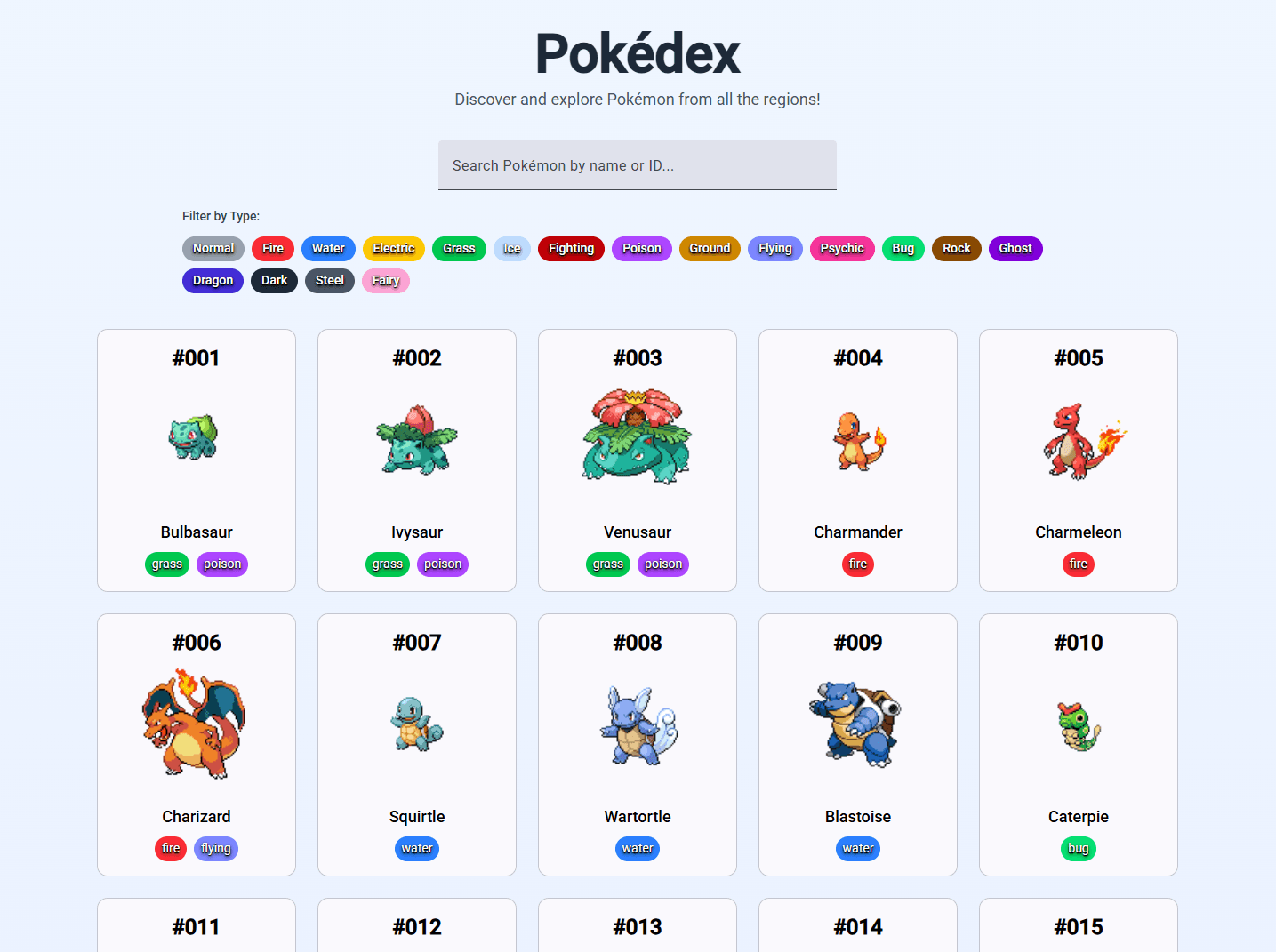
An Angular application for exploring Pokémon through fast search, filters, detailed statistics, evolutions, and animated imagery from PokéAPI.
Inside the project
Context
PokéAPI exposes a broad network of related resources. I built this project to learn Angular by turning that data into a focused browsing experience where users can move naturally from a list of Pokémon to detailed and connected information.
Role
I designed and developed the complete application, including API integration, data mapping, search and filters, responsive views, animations, and the component structure.
Constraints
Individual Pokémon views depend on several API resources, and those relationships should not make navigation feel fragmented or slow. The interface also needed to present dense statistics without overwhelming users on smaller screens.
Approach
The Angular front end composes reusable components from Angular Material and organises search, filters, cards, statistics, images, and evolution chains into predictable views. Data from PokéAPI is normalised for display so that API structure does not leak into the user experience.
Outcome
The deployed application lets visitors quickly find Pokémon, compare key information, and follow their evolution paths in one responsive interface. It also became a practical exploration of Angular conventions, dependency injection, and reactive UI design.
Lessons
The project strengthened my approach to modelling third-party API data and separating remote resource shapes from presentation models. It also showed how a component library can accelerate development when its patterns are adapted to the product rather than used unchanged.