Case study
Plate Detection
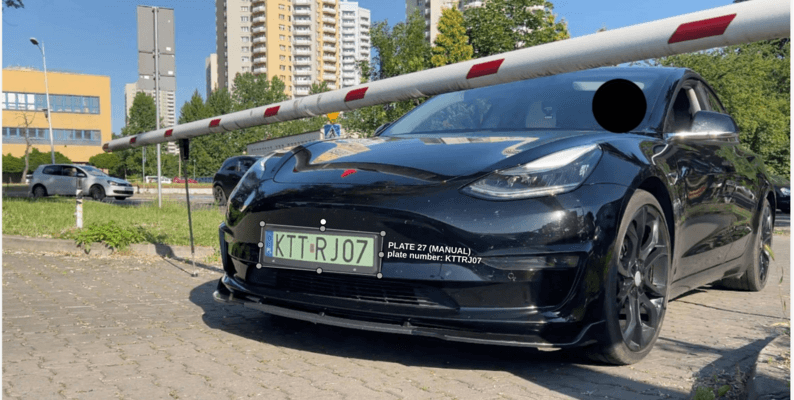
An end-to-end computer-vision pipeline that detects licence plates with YOLOv8, reads them with PaddleOCR, and evaluates predictions against ground truth.
Inside the project
Context
The project explores the complete path from a vehicle image to measurable licence-plate recognition results. It processes an annotated dataset, detects plates, extracts their text, and compares predictions with reference data instead of stopping at a visual demo.
Role
I designed and implemented the modular Python pipeline, connected image annotations with detection and OCR, and built the evaluation and reporting stages.
Constraints
Plate localisation and text recognition have different failure modes. The workflow therefore had to preserve intermediate outputs, align predictions with ground-truth annotations, and remain easy to extend as models or evaluation rules changed.
Approach
YOLOv8 localises licence plates, PaddleOCR reads the cropped regions, and separate modules handle dataset loading, annotation analysis, processing, evaluation, and reporting. Results are written to CSV and summary files so individual errors and aggregate statistics can be inspected independently.
Outcome
The pipeline processes the full dataset, produces detected regions and recognised text, evaluates the outputs against annotated examples, and generates reusable result files for further analysis.
Lessons
Separating localisation, recognition, and evaluation made model errors much easier to diagnose. The project reinforced the value of reproducible datasets, explicit intermediate artifacts, and metrics that describe more than a few successful screenshots.